
Manage HR Magazine: Specials Magazine
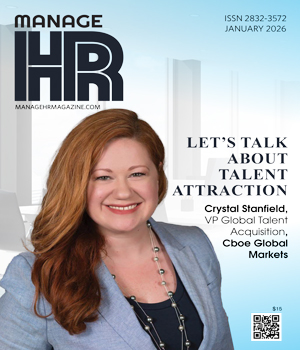
For those that don’t know me, I’m Crystal Stanfield, and I’ve been in the Recruiting and Talent Acquisition space for 25 years now. Through all these years, I’ve said time and time again that Talent Acquisition is the sales and marketing of a company’s HR. At the core of that philosophy sits Talent Attraction. Stories are powerful. It’s only natural that recruiters must become skilled storytellers in order to influence and persuade high-performing individuals who may not be actively seeking a new career opportunity. Talent Attraction is about reframing the mindset—turning “It’s not always greener on the other side” into a compelling case for growth, fulfillment, and opportunity. But its utility doesn’t stop there. Talent Attraction can also serve broader strategic purposes—casting wide nets, niche nets, or highly targeted ones to meet different organizational needs. One of the things I truly enjoy is using Talent Attraction strategies to solve real business problems. Technology and vendors can certainly play a role, but Talent Attraction is the unifying umbrella. When developing strategies, I recommend following a consistent structure. Begin by identifying the core problem. Are you addressing supply and demand issues, opening a new office in a new location, building early-career pipelines, preparing for critical skill shortages, or increasing diversity? Once you define the challenge, you can start to formulate the right approach.
Professional Employer Organizations
For the second time, we’re naming ThePEOPeople.com our Top PEO Broker of the Year. This recognition isn’t earned through marketing claims, lofty promises, or polished demos. It’s earned by consistently helping employers make the right PEO decision and, just as importantly, avoid the costly mistakes that often don’t surface until months after implementation. Selecting a PEO is one of the most consequential operational decisions a business can make. It simultaneously impacts payroll, benefits, compliance, HR support, risk management, and the employee experience. Yet many employers underestimate the complexity of the process until they’re already in it, chasing documentation, comparing plans that appear similar but perform very differently, and evaluating service models and technology platforms that have evolved well beyond traditional “HR outsourcing.” The challenge is that PEOs rarely make comparison easy. Employers that go direct often hear the same pitch from every provider: we do everything, we do it better, and we cost less. Meanwhile, the questions that actually determine long-term success, including implementation reality, renewal behavior, service structure, technology access, compliance handling, and what’s excluded from “standard”, are precisely the questions many buyers don’t even know to ask. That gap is why finding a brokerage with real experience, internal expertise, and a verifiable history of successful placements is harder than it should be. ThePEOPeople.com brings clarity to a messy process, pressure tests the details that create downstream problems, and relies on systems and standards that earn trust rather than demand it.

Talent Management

Workforce management today requires organizations to continually realign talent to meet evolving business needs. Sometimes that realignment includes reductions in force, a reality that demands clarity, care, and disciplined execution. Technology can streamline the process, but successful transitions still depend on trust, consistency, and human connection. That is the balance CMP is built to deliver through high touch support that helps people move forward while protecting the employer brand. “Our goal is to advance individual careers while strengthening the brands we serve,” says CEO Maryanne Piña. “To us, that is outplacement done right.” A minority and women owned firm, CMP supports organizations across the United States, Latin America, Europe, and Asia often operating as an extension of HR teams during complex moments like reorganizations and M&A integrations. CMP’s career transition experience is designed to deliver faster, more confident landings and a steadier employee experience during change. With certified coaches and a capped caseload of no more than 25 participants, individuals receive consistent, culturally competent support that strengthens clarity, momentum, and accountability, resulting in stronger positioning, better interviews, and smoother onboarding into the next role. CMP’s Career Victory Portal extends impact at scale by giving participants always on access to AI enabled coaching, resume and LinkedIn optimization, interview practice, job search tools, scheduling, and networking support in more than 40 languages. For HR leaders, the platform provides real time visibility into engagement and progress, plus quarterly reporting that translates activity into outcomes, including landing rates and key milestones that demonstrate program effectiveness. Well being is treated as a performance factor, not an add on. Coaches are trained to recognize distress early and respond with care, helping participants stay resilient, focused, and forward moving. The result is reduced disruption, lower anxiety driven escalation, and a more stable transition experience that protects both people and employer brand. CMP’s impact shows up most clearly in high complexity change environments. In one engagement, a Fortune 500 organization navigating an acquisition needed to support HR teams across Europe and Asia through a workforce change. CMP enabled a structured approach that included manager readiness, employee communications support, and delivery of career transition services, helping the organization move quickly while sustaining a consistent candidate experience.
Language Services
Organizations recognize the importance of employee engagement but often struggle to turn that understanding into sustained action. This challenge is especially pronounced in small and mid-sized businesses, where leadership teams, stretched thin by tactical HR tasks like payroll and compliance, prioritize short-term execution over strategic development. As managers act as both player and coach, many lack the clarity needed to lead people effectively, defaulting instead to individual contributor work that feels clearer and more controllable. Over time, this dynamic weakens engagement, blurs roles, and leaves potential untapped, affecting profitability, morale, and long-term success. Addressing this gap, Activate Human Capital Group helps organizations build purpose-driven workplaces where clearly aligned roles and meaningful engagement improve performance, strengthen employee well-being, and enhance customer experiences. “We prioritize mindset over demographics to empower leaders who are ready to invest in building workplaces that drive real business results,” says Melissa Yerxa Ortiz, talent optimization expert. Activate distinguishes itself through a hands-on, consultative approach in an industry increasingly dominated by self-serve engagement platforms. Rather than delivering surveys and static reports, the firm manages the entire engagement process, from communication planning and confidentiality assurance to project management. This guidance helps leaders identify needed support, with Activate facilitating leadership discussions and action planning to turn insights into meaningful change, not just tasks. In practice, the firm’s most significant competition is often inaction. Engagement work can feel ambiguous and complex to prioritize, making it easier for organizations to defer action altogether. Activate’s approach removes that ambiguity by breaking engagement into clear, manageable steps leaders can realistically execute. The approach is rooted in the team’s experience at Gallup Consulting and reflects a belief that engagement success depends on disciplined process and follow-through rather than data alone.

HR Compliance

Every year, companies across the United States face billions of dollars in fines due to wage and hour violations under the Fair Labor Standards Act. At the same time, mental health challenges, absenteeism, and employee turnover are at historically high levels, costing businesses even more through lost productivity, recruitment, and training. Family-owned businesses are also experiencing leadership breakdowns, with emotional disputes threatening to disrupt operations. Compounding these issues are rising healthcare costs, employee burnout, and shifting workforce expectations that emphasize flexibility, work-life balance, and transparency. Inconsistent HR practices, employee misclassification, and the growing need to meet DEI standards further increase operational pressure. This is where the experience of people management experts such as SESCO Management Consultants becomes critical. As the oldest labor and employment law consulting firm in the United States, SESCO is also among the most experienced, with over 80 years of service at the intersection of people, performance, and compliance. “At SESCO, we see people problems as business risks, and our role is to step in before those risks turn into fines, litigation, or leadership breakdowns,” says Bill Ford, president. The firm delivers customized HR solutions that ensure compliance, strengthen employee engagement, and address complex workforce challenges. Its hands-on approach, characterized by direct communication and ongoing client support, helps transform complex HR issues into trusted partnerships that drive business performance.
Immigration Law

Employee Engagement Promoting Company Culture
Kim Zubrickas, Chief Human Resources Officer, Carl Buddig and Company
Employee Benefits

Navigating the Complex World of HR
Allie LaVista, Sr. Director, HR Business Partner, Danone North America
Executive Search

Driving People-Centered Leadership for Organizational Success
Jules Gianneschi, Chief Human Resources Officer, America’s CAR-MART, Inc
Leadership Development

Balancing Tech and Touch: A Strategic Approach to Global Talent
Santiago Bedolla, Director, Global Talent Acquisition, Driscoll’s
Professional Employer Organizations

Aligning Metrics to Elevate the Hiring Experience
Lori Davis, Director of Talent Acquisition and Employee Engagement, HOYA Vision Care
IN MY OPINION
Emotional Intelligence
Employee Engagement Begins with Being Human
Maigen Rowe, Sr. Director, Global Employee Experience, Allegion

LAST WORD
Workplace Investigation
Leading with Empathy
Jennifer McClain, Vice President Total Rewards, the Hertz Corporation
IN FOCUS

Employee Experience and Engagement: Transforming Culture Through Insights
Employee engagement services integrate data, design, and strategy to strengthen workforce alignment, performance, well-being, and long-term organizational value creation.

Thriving in a Competitive Market: Innovative Approaches to Talent Acquisition and Outplacement
Businesses must adapt talent management strategies, prioritize outplacement services, and leverage technology to enhance employee transitions and maintain competitiveness.
EDITORIAL
The Reliability Advantage: How Workforce Leaders Are Redefining Modern Employment
Workforce management has reached a level of operational maturity where hiring, compliance, benefits administration and workforce transitions are no longer the hardest parts. Employment regulations follow established frameworks, administrative processes are clearly mapped and external service providers now operate at enterprise scale.
The strategic priority for 2026 is more complex: preserving workforce continuity across cycles. The most forward-leaning organizations are using this maturity to pursue a higher mandate, treating continuity of engagement, compliance and support as a core operational asset that strengthens organizational durability. This shift reframes workforce services as a measurable advantage. In an environment defined by labor mobility, regulatory change and organizational restructuring, the ability to maintain momentum, retain institutional knowledge and ensure workforce stability compounds rather than resets is becoming essential.
This edition highlights four organizations recognized for leadership across essential workforce functions. Activate Human Capital Group, named Top Employee Engagement Service 2026, shows how engagement has become a driver of continuity and performance. CMP, awarded Top Talent and Outplacement Service 2026, underscores the growing importance of managing workforce transitions with precision. SESCO Management Consultants, recognized as Top HR and Employment Law Compliance Service 2026, demonstrates how regulatory rigor translates into operational strength. Rounding out the profiles, ThePEOPeople.com, named Top PEO Broker 2026, illustrates the role of integrated employment infrastructure in supporting workforce stability.
In CXO Insights, Jennifer McClain of Hertz Corporation makes the case that employee engagement must be grounded in empathy, arguing that leadership effectiveness depends on understanding the whole person rather than just performance metrics. Maigen Rowe of Allegion reinforces this view, noting that employee engagement is sustained when leaders prioritize authentic connection and ground engagement strategies in everyday interaction.
Across workforce management, one signal is clear. The organizations shaping the next cycle will operationalize continuity across hiring, engagement and transition. By 2026, reliability, not responsiveness, will be the defining workforce asset.

