
Manage HR Magazine: Specials Magazine

Ouellette holds a degree from the University of Moncton and has valuable experience working with Aramark Sports and Entertainment and the Government of Canada. He has built his career around supporting people, culture, and organizational growth. Through progressive roles in human resources, he developed expertise in employee relations, talent development, and strategic HR leadership. Eric’s journey reflects a steady focus on aligning people practices with business objectives. Three Decades of Leadership Across Industries As the Director of Human Resources at Osgoode Properties, my journey through the human resources landscape has spanned over three decades, and I have been fortunate to witness and drive numerous transformations within the field. I have worked across various industries, from contact centers to the public sector, sports, and entertainment, each with its own challenges and nuances. However, one core truth has remained consistent: HR is the cornerstone of an organization, transcending the boundaries of any specific industry. Whether it is policy compliance, internal development, or employee relations, HR plays an essential role in supporting both employees and the organization itself.
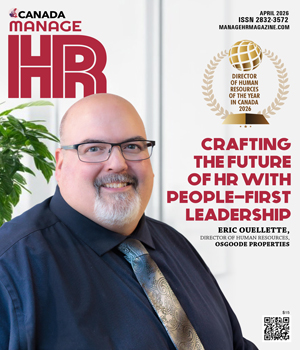
How can workplace investigations drive cultural change beyond resolving individual complaints? Marshall Workplace Law approaches workplace investigations as more than reactive responses to complaints. When conducted thoughtfully through a preventative and restorative lens, they can serve as a catalyst for cultural change, risk mitigation and organizational learning. “Findings are not treated as endpoints for us,” says Nathaniel Marshall, workplace investigator and employment lawyer. “We use them to identify patterns, strengthen internal processes, and build accountability in a way that reduces risk and reinforces trust. That becomes particularly important as workplace expectations continue to evolve.” Trauma-informed practices, equity-based analysis and systemic reviews are quickly becoming the benchmarks for effective risk assessment and conflict response. Marshall Workplace Law’s preventative philosophy places the firm at the forefront of this shift, shaping its impact and reinforcing its recognition as Workplace Investigation Firm of the Year in Canada 2026. Independent and Context-Specific Investigations Why is contextual and independent investigation critical across unionized and non-unionized workplaces? The law firm conducts investigations across both unionized and non-unionized environments, each requiring contextual precision. In unionized settings, investigations are grounded in collective agreements and established labor relations frameworks. In non-unionized workplaces, analysis is anchored in internal policies, employment standards and organizational norms. Each engagement begins with a structured intake and contextual assessment. This may include reviewing prior investigations, complaint data, relevant documentation, and reporting pathways to preserve evidentiary integrity and identify recurring patterns. That assessment informs interview sequencing, scope definition and procedural safeguards..read more
Workplace Safety

Windley Ely (WE) is a premier Canadian provider of workers’ compensation and absence management services, recognized for its expertise, trusted approach, and enduring client partnerships. What began as a small, specialized workers’ compensation firm has grown into a national leader, now supporting over 550 clients across diverse industries through strong relationships and referrals. With a team of over 150 employees and offices in London, ON, Ottawa, ON, Vancouver, BC, Calgary, AB, and Montreal, QC, Windley Ely combines extensive scale with strong local expertise. Clients benefit from bilingual services and a coast-to-coast network that spans the country, ensuring consistent and reliable support nationwide. Blending Compliance, Care, and Long-term Partnership Windley Ely balances the needs of employers and employees. For employers, the company delivers compliance, consistency, risk reduction, and cost savings. From the employee’s perspective, the program provides a clear structure and expectations throughout the claims and recovery process. With WE’s strong claims management and close monitoring of recovery milestones, any deviations are identified early. This supports a safe and timely return to their pre-injury health and duties. “Rather than operating transactionally, we emphasize long-term partnerships, embedding ourselves as an extension of an employer’s team and ensuring health, safety, and claims processes are managed with care,” says Lauren Walls, Associate Director of Operations. This relationship-driven model gives employers peace of mind while freeing staff to focus on prevention and employee well-being. By acting as a buffer between employers and workers’ compensation boards, WE helps preserve positive employer– employee relationships. As a trusted partner, WE ensure all stakeholders are treated fairly and held accountable, while meeting all regulatory obligations. While employees may not always be happy with claim denials, any dissatisfaction is directed toward WE—not their employer—helping to maintain that important relationship.
HR Consulting

Boosting Next-level Leadership
Natasha Pannozzo, Director, Human Resources, Grainger Canada
Corporate Wellness

Strategic HR Alignment to Help You Drive Business Success
Margo Gordon, Vice President of Human Resources, Teknion
Leadership Development

Why Your Benefits Plan May Need A Marketing Makeover
Kirsten Koblun, Senior Manager, Benefits, Colliers
Corporate Wellness

Maximizing Benefits Through Innovation In Hr Solutions
Christine Rupp, Independent Board Director/Chairperson of Transformation Committee, Canadian Tire Corporation
Leadership Development

Your Best Work Might Start Outside of Work
Meredith Ivany, Manager, Talent Acquisition and Retention Programs, NAV CANADA

IN MY OPINION
Employment Law
Building a Resilient and Future-Ready Workforce in Fresh Produce
Lui Lanzillotta, Director, Human Resources, Burnac Produce
LAST WORD
Benefits Administration
Using AI Solutions For Benefits Administration
Lindsay Thompson, Manager of Health, Retirement & Wellness, Canada, Samuel, Son & Co
IN FOCUS

Transformative Leadership: HR Directors Redefining Work Culture in Canada
Directors of human resources in Canada are redefining leadership through workforce strategy, employee wellbeing initiatives, digital transformation, and inclusive workplace policies.
A New Era for Workplace Investigations in Canada
Workplace investigation firms in Canada are embracing technology, legal complexities, and industry-specific expertise to navigate challenges and seize emerging opportunities.
EDITORIAL
People-Centered Leadership Shaping the Future of HR
Organizations today are rethinking how human resources contributes to long-term organizational performance. In this edition of Manage HR Canada, we explore how HR leaders are strengthening employee engagement, improving benefits communication, and aligning workforce strategies with evolving organizational priorities.
Our cover story recognizes Osgoode Properties as Top Director of Human Resources 2026, highlighting the leadership of Eric Ouellette, Director of Human Resources. With more than three decades of HR experience across multiple industries, Ouellette emphasizes the importance of aligning HR initiatives with broader business objectives. At Osgoode Properties, HR plays a central role in supporting employee development and operational effectiveness. One of the company’s key initiatives is its structured career pathing program, which provides employees with clearly defined advancement opportunities supported by internal training and education programs. This framework helps employees understand longterm growth opportunities while strengthening retention and organizational continuity.
Among this year’s award recipients, Marshall Workplace Law, recognized as Workplace Investigation Firm of the Year in Canada 2026, demonstrates how investigative rigor can extend beyond compliance into organizational transformation. The firm’s methodology integrates structured intake processes, equity-informed analysis, and systemic reviews to identify root causes rather than isolated incidents.
Across this edition, the importance of clear communication and thoughtful benefits design emerges as a consistent theme in building engaged and informed workforces.
Contributing to this discussion, Kirsten Koblun, Senior Manager, Benefits at Colliers, emphasizes that organizations often underestimate the importance of effectively communicating benefits programs to employees. She notes that refining how benefits are presented and explained can significantly improve employee understanding and program utilization. Similarly, Christine Rupp, Independent Board Director/Chairperson of Transformation Committee at Canadian Tire Corporation, highlights the value of connecting employees directly with benefit providers to improve engagement and access.
Together, these insights demonstrate that strong HR leadership depends on clarity, communication, and a sustained focus on employee development.

Be first to read the latest tech news, Industry Leader's Insights, and CIO interviews of medium and large enterprises exclusively from Manage HR Magazine
